
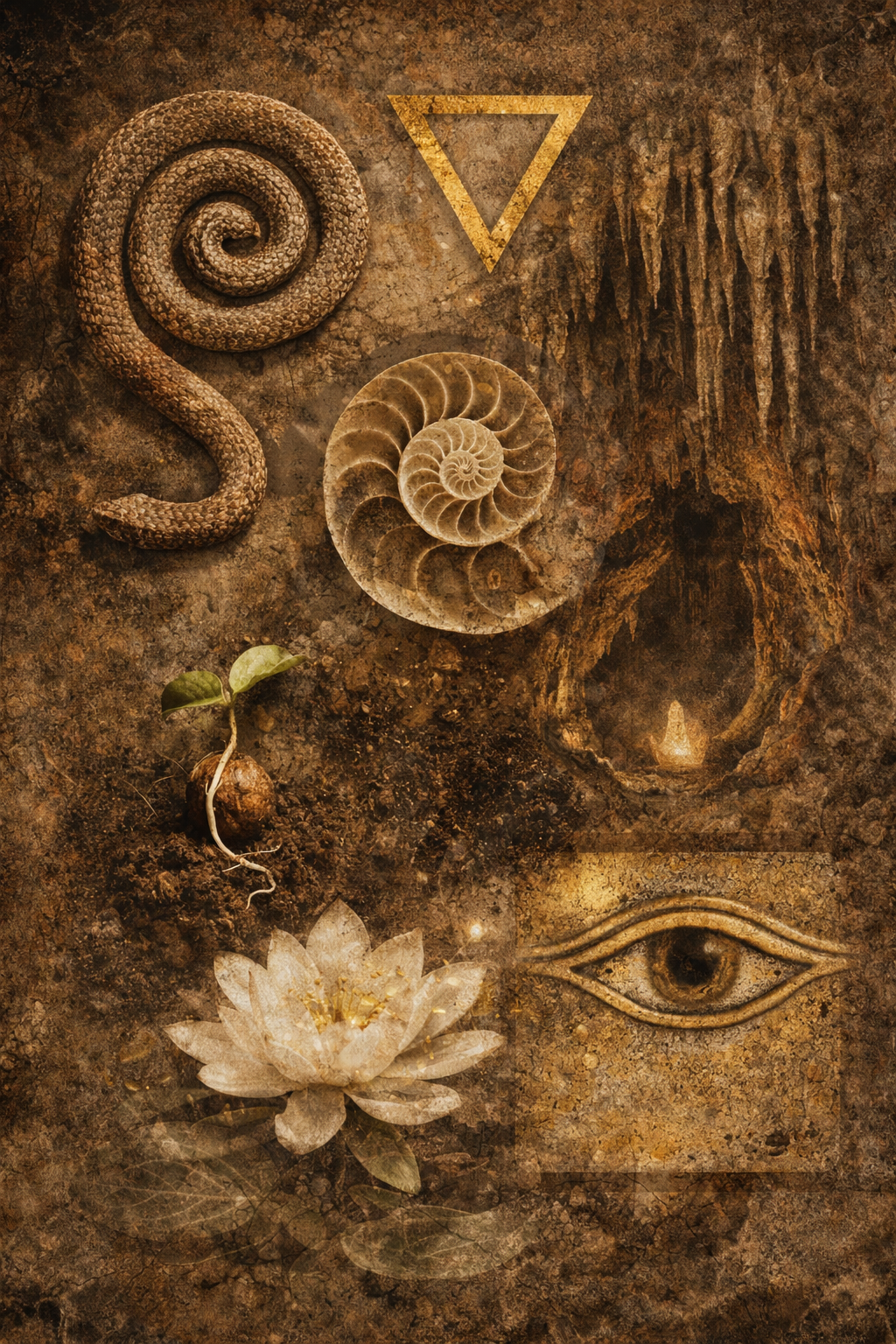
a guide to symbols
Across cultures and throughout human history, symbols have been used to express ideas that words alone cannot hold. Long before written language, humans used shape, pattern, and image to communicate memory, knowledge, protection, and relationship to the natural world.
Symbols speak directly to the human psyche. They help us process experience, make meaning, and connect to patterns that exist across time — birth, death, growth, change, relationship, belonging, and transformation.
Symbols are not static. They evolve as cultures evolve, and they carry layers of meaning depending on time, place, and lived experience. What makes symbols powerful is not that they have one fixed meaning, but that they can hold many truths at once.
Adornment has historically been one of the ways humans carry symbols close to the body — as protection, reminder, identity, and relationship to something larger than self.
A Note on Interpretation
The meanings shared here come from my own study of symbolism across cultures, history, mythology, psychology, and ecology — as well as my own lived experience, creative practice, and intuition.
These interpretations are not meant to be universal or fixed. They are the symbolic language that naturally emerges through my work and the materials I am drawn to create with.
Symbols are relational. You may experience them differently — and that is part of their power.
The Eye
The eye symbolizes awareness, witnessing, and the ability to see both external reality and inner truth simultaneously. It represents perception without distortion—clarity that comes from presence and intuition rather than judgment. In this symbolic language, the eye reflects conscious participation in life: seeing patterns, recognizing impact, noticing beauty, and acknowledging what needs care or protection. It reminds us that attention itself is powerful—what we truly see, we can begin to understand, tend, and transform.
The Circle
The circle represents wholeness, continuity, and the living systems we exist within. With no beginning or end, it reflects cycles—seasons, breath, growth, decay, and renewal—while also symbolizing protection, sacred space, and belonging. Here, the circle carries relational meaning: everything exists within something larger, and nothing is truly separate. It represents unity without uniformity and change without fragmentation.
the lotus
The lotus symbolizes transformation through lived experience—the ability to rise from depth, challenge, or shadow into clarity, beauty, and full expression. It reflects the truth that growth is not separate from difficulty, but often shaped by it. In this symbolic framework, the lotus represents grounded becoming: rooted in reality while still reaching toward expansion, expression, and light.
the serpent
The serpent represents life force, instinctual intelligence, protection, and cyclical transformation. Through the shedding of skin, it symbolizes evolution as a natural process of outgrowing what once protected us. Here, the serpent is deeply connected to embodied wisdom—the knowing held in the nervous system, the gut, and ancient biological memory—and to transformation shaped through experience rather than force.
the spiral
The spiral represents growth through return—evolution that revisits previous places with deeper understanding rather than repeating them. It reflects time as layered rather than linear, and healing, learning, and becoming as processes that deepen through cycles. Within this symbolism, the spiral represents integration: nothing is wasted, and everything becomes part of an expanding pattern of self and story.
The sacred Triangle
The inverted triangle symbolizes receptivity, embodiment, and the movement of energy into physical form. It often represents the body as vessel, the womb space (literal or symbolic), and the intelligence of grounding vision into lived reality. Here, it reflects the understanding that creation is not only upward striving, but downward rooting—bringing meaning, emotion, and vision into tangible life.
the moon
The moon symbolizes cycles, intuition, emotional intelligence, and the unseen forces shaping visible life. It represents rhythm—growth, fullness, release, and rest—validating inward phases as essential rather than lesser. Within this symbolic language, the moon reflects trust in timing and recognition that transformation often begins quietly, beneath the surface.
the sun
The sun represents vitality, clarity, life force, and conscious expression. It symbolizes illumination, warmth, and generative energy that sustains life and growth. Here, the sun reflects life-supporting power—creative force that nourishes, stabilizes, and reveals rather than overwhelms or dominates.
the heart
The heart symbolizes relational courage, connection, devotion, and the willingness to remain open to life. It represents emotional intelligence balanced with boundary and self-respect. In this symbolic system, the heart reflects resilience—the ability to stay capable of love, care, and beauty even after difficulty, without abandoning selfhood.
key hole/ Doorway
The keyhole or doorway symbolizes threshold, initiation, and movement between states of being—between known and unknown, past and emerging future. It reflects readiness, timing, and conscious choice. Here, this symbol represents sacred transition and intentional entry into new identity, understanding, or life phase.
The Horizon
The horizon symbolizes possibility, direction, and the meeting place between what is known and what is emerging. It represents orientation rather than arrival. Within this symbolic framework, the horizon reflects grounded hope—the ability to see forward while staying rooted in the present moment.
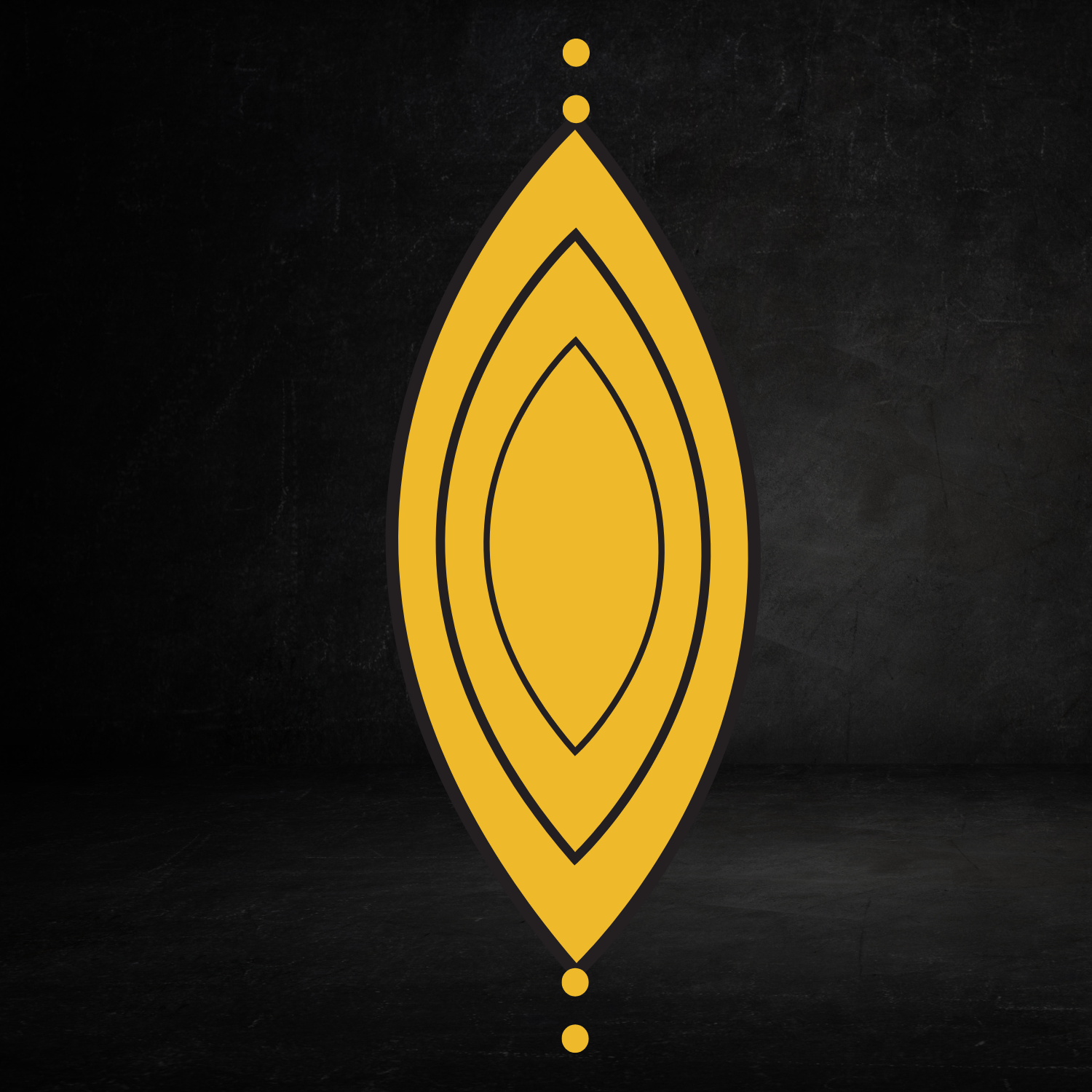
the Vesica Piscis
The vesica piscis is formed where two circles intersect, each passing through the other's center — a third form born from the meeting of two wholes. One of the oldest geometric symbols in the human record, it appears in Neolithic carvings, sacred architecture, and the esoteric traditions of cultures across the ancient world. Its shape mirrors the vulva and the womb, making it one of the earliest symbols associated with the generative, life-bearing feminine. In sacred geometry it is known as the Seed of Life — the gateway through which creation passes into form. Here, this symbol represents the Mother archetype in her most elemental expression: not motherhood as role, but as cosmic principle. The capacity to hold, to generate, and to bring forth. The threshold through which all life enters the world.
Mountains symbolize endurance, perspective, stability, deep time, and the untamed spirit. They hold memory—geological, ancestral, and ecological—and represent strength that is patient, and connected, grounded, and enduring. Here, mountains reflect rooted sovereignty: being anchored in place, values, and truth while still participating in change.